 THE RETURN OF
TOWNS AND TRADE
THE RETURN OF
TOWNS AND TRADE
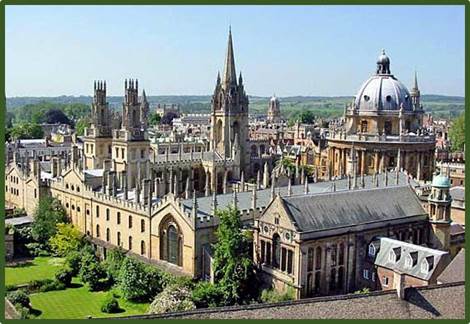
University
of Oxford founded in 1096: Oxford,
England
Unit
Overview
The
Crusades had given Europeans a glimpse of life beyond the manor and renewed an
interest in goods that could not be produced locally. This brought about a revival of trade and the
return of towns in the West. Improved
farming methods increased the food supply and sparked a growth in population. Society was no longer divided between nobles
and peasants. It included a thriving
middle class. Let’s see how it all
happened.
Better
Farming Methods
The
dramatic changes that occurred in Europe between 1000 and 1300 would have been
impossible without better farming methods.
Heavy metal plows gradually replaced lighter wooden ones. They reached into the ground and turned over
the deeper, richer soil. This resulted
in larger harvests and more food for millions of peasants. There was also a change in the type of
animals that pulled the plows. For
several centuries, farmers had used oxen for this purpose. Although they were strong and could survive
on straw, oxen did not move very fast.
Horses were much quicker but required more nourishment. More importantly, the harnesses customarily
used during the early Middle Ages made it difficult for them to breathe. The
invention of the horse collar, which
fit across the chest rather than the neck, solved this problem. With the introduction of the collar, horses
gradually replaced oxen in the fields.
Because farmers could plow more land in a single day, forests were
cleared, and swamps were drained. With
more fields available to plant, stronger plows and animals better suited to
farming, peasants saw a major increase in their crops.
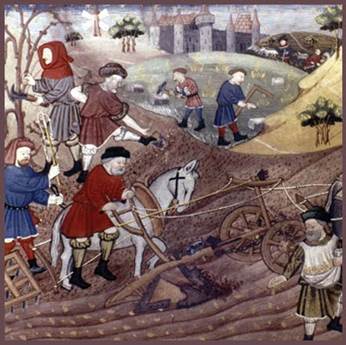
Illustration
from a French Manuscript Showing the Horse Collar and Improved Plow
At
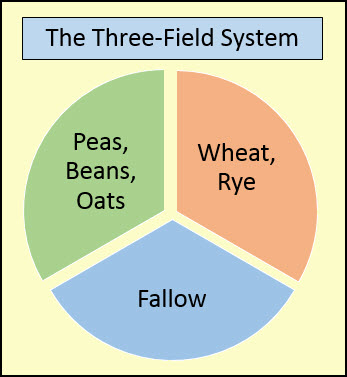
the same time, farmers adjusted their planting schedules to grow more crops. In the early Middle Ages, fields were divided
into two parts and rotated annually. One
section included the standard crops, while the other was left fallow or unplanted. In theory, the two-field system made the soil
less likely to wear out. About 800, some
peasants shifted to the three-field
system. On one-third of their land,
they planted grains, such as wheat or rye.
In another sector, peas, beans and oats made up the crop. The third portion remained fallow. This meant that farmers were using two-thirds
as opposed to one-half of their growing space every year. This gave the peasants an ample supply of
food and a better diet. They also lived
longer and had larger families.
The
Return of Trade
When
the crusaders returned, they told stories about what they had experienced on
their travels. Europe’s growing
population soon developed an interest in goods that could not be produced on
the manor. Furs from Asia, spices from
the Middle East and iron farm tools were in high demand. Because wars among the lords and foreign
invasions had declined, traders journeyed abroad and back to meet these
needs. They formed companies and hired
guards to protect their caravans as they traveled across the deserts and on to
Asia. When the caravans returned to
Constantinople, merchants were able to purchase everything from Chinese silk to
gold jewelry for resale in Europe. These
goods were usually transported by ship to Venice, Italy and other cities. Then, they were carried across Europe by pack
animals. Traders met their customers at
weekly trade fairs held in towns and cities that were once again thriving
throughout Europe.
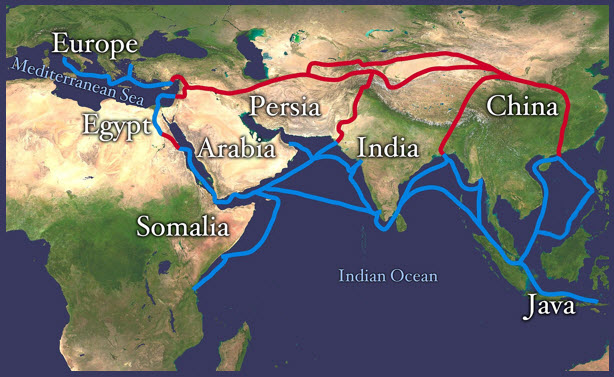
Trade
Routes from Asia and the Middle East
The
Return of Towns
The
increase in population encouraged people to leave the countryside and to settle
in towns and cities. They were small by
modern standards but became a powerful force in Western Europe. The towns sponsored weekly trade fairs or market days. Farmers brought produce and animals to
exchange for tools, and traders sold more expensive goods to the families of
local nobles. Jugglers, musicians,
acrobats and animal trainers with dancing bears entertained the crowds. The manor was no longer the self-sufficient
supplier of all things, and this fact totally changed the economy of
Europe. Towns with cathedrals attracted
even more visitors because people came as pilgrims to worship in these
beautiful churches. During these trips,
they ate in the local taverns and bought items from the town’s merchants. To explore life in the medieval town of
Saint-Denis, click on the graphic below.

Eventually,
some merchants established permanent shops within the towns. Candle makers, wheelwrights and other small
businesses opened storefronts rather than stalls on market day. The townspeople did not quite fit into the
traditional feudal pyramid, because they were not nobles or peasants. Instead, they formed a new social group
called the middle class. Since the walled, medieval towns were called burghs, those who lived in them were
referred to as burghers. As expected, nobles were not pleased with the
development of the middle class and their increasing wealth. The lords resented the towns established on
their property and charged fees for everything from the use of bridges to the
right to hear cases in court. The
burghers, however, held very powerful weapon—cash. In exchange for money, the lords reluctantly
granted written charters that gave
the towns certain privileges and tax exemptions.
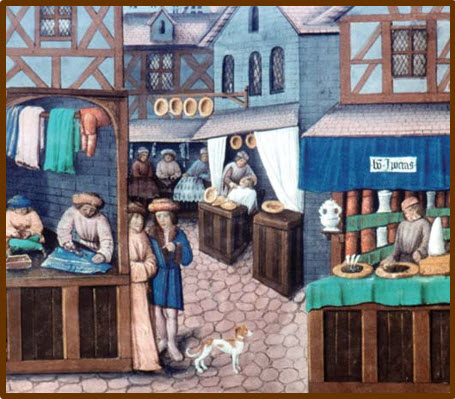
Market Day in a Medieval Town
The
Formation of Guilds
To
keep prices uniform and to provide standards for conducting business, merchants
in the towns formed guilds. The members built guild halls where they held
meetings to make rules and to discuss the concerns of local shopkeepers. The guilds collected dues from their members
and contributed money for the upkeep of the town’s protective walls and for the
pavement of streets. Soon workers who
were skilled in particular crafts created their own guilds. They cooperated to do what was best for their
own economic interest. A town often had
a variety of these organizations, such as a bakers’ guild, a glassmakers’ guild
and a shoemakers’ guild.
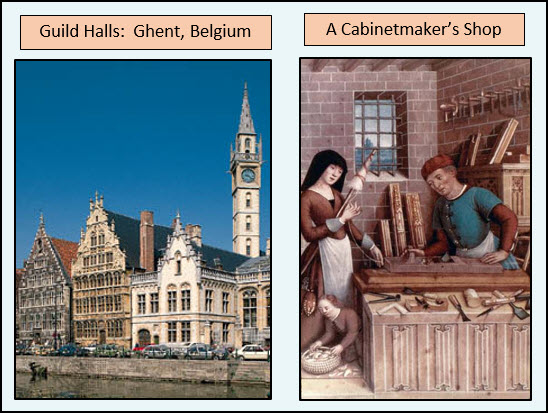
To
become a member of a craft guild, a worker had to be a skilled master of his trade. The process began when parents paid a fee to
a master craftsman to train their child.
As an apprentice, the trainee
lived in the master’s home and worked in his shop. Although he did not collect a salary, the
apprentice did receive room and board.
This arrangement continued anywhere from three to twelve years. The apprentice then became a journeyman and worked for wages. Eventually, when the journeyman had made an
item that was considered a masterpiece in his field, he became a master craftsman and jointed the
guild.
There
were certain advantages to joining the guild.
For example, the guild established the minimum and maximum prices for
which its craft could be sold.
Agreements with the town ensured that only guild members could sell
their wares within its borders. Membership was almost like a type of insurance
policy. The guilds often covered the
funeral expenses of their members and cared for a master’s family if he became
disabled. At the same time, the use of
new technology had to be approved by the members of the guild and added to
their regulations. This often became a
long and difficult process that limited the use of new and better methods.
A
Renewed Interest in Learning
By
1110, a new generation of Europeans recognized the need for education. The Church wanted a more knowledgeable clergy,
and kings looked for literate men to keep records. The improving economy needed individuals who
were able to write and who knew basic math.
All of these factors led to a new interest in learning and resulted in
the establishment of universities in
Western Europe. Today, when we think of
universities, we picture a group of impressive buildings located on an
attractive campus. In the Middle Ages, a
university consisted of a group of scholars that met in a rented room or a
church choir loft. These rooms were
often cold and drafty with uncomfortable seats.
Nonetheless, Paris in France, Bologna in Italy and Oxford in England all
had these busy, academic communities by 1200.
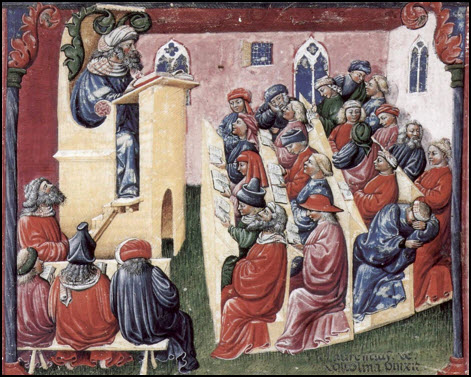
University Class: 1300
Most
university programs consisted of grammar, logic, rhetoric (the art of public
speaking), music, arithmetic, geometry and astronomy. Students, most of whom came from the middle
class, did not have their own textbooks.
At this time, all books were handwritten and very expensive. Some students rented their books, but this,
too, was a costly venture. Teachers read
aloud from single copies of books and commented on the content. Those in attendance were supposed to listen
and to memorize as much as possible. All
lectures were given in Latin, which
was still considered the language of scholarship. Tests were oral because writing materials
were scarce.
The
Crusades brought Europeans into contact with the Byzantine Empire and renewed
interest in Greek and Roman learning.
Although many Greek and Latin texts were destroyed in the West, Muslim
scholars had preserved them by re-writing them Arabic. When Christian scholars visited Muslim
libraries in Spain, they discovered that Jewish researchers had translated the
Arabic versions into Latin. The new
translations provided the key to the works of Aristotle, Plato, Hippocrates and
other writers from the classical past.
What
Happened Next?
Just
as Europe seemed to be on the verge of a new era of growth and prosperity, a
series of crises threatened its progress.
Throughout the 1300s, crop failures, a plague and destructive wars
between France and England combined to create disastrous consequences. Before examining these events and their
effects in Unit 17, review the information in Unit 16; then, complete Questions
21 through 30.