 THE WAR WITH
MEXICO
THE WAR WITH
MEXICO
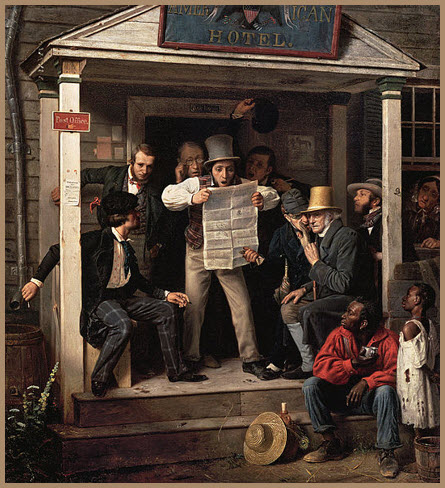
War News from Mexico:
Richard Caton Woodville, 1848
Unit
Overview
While
Americans congratulated themselves on the annexation of Texas in 1845, Mexican
resentment and distrust of the U.S. government grew. By 1846, the two countries engaged in a war
that ultimately added a half-million miles of land to the United States. It became the first conflict covered by the
press on a daily basis and provided military experience to a group of young
officers who would emerge as commanders in the American Civil War. Let’s see how it all happened.
The
New Mexico Territory
In
the early 1800s, the area between Texas and California was called the New Mexico Territory. It included all of present-day New Mexico,
Utah, Nevada and Arizona along with parts of Colorado and Wyoming. Spanish conquistadors explored the region in
the late 1500s and founded the town of Santa Fe in 1610. After winning independence from Spain, Mexico
took possession of the New Mexico Territory in 1821. Because the Mexican capital was far away, New
Mexicans generally governed themselves.
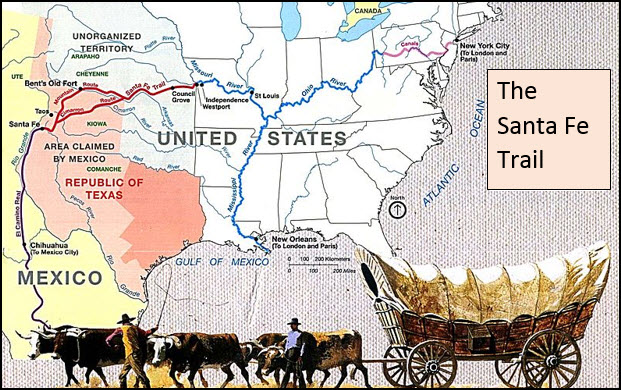
Map Showing the Santa Fe Trail
Although
the Spanish had worked to prevent an American presence in the New Mexico
Territory, Mexico changed this policy.
It hoped to improve the economy of the region through trade with the
United States. The first American trader
to take advantage of the new law was William
Becknell. He arrived in Santa Fe in
1821 with a pack of mules loaded with manufactured products and sold them for a
large profit. Becknell traveled from the
Midwest along a route known as the Santa Fe Trail. Other traders soon followed, and the Santa Fe Trail developed into a busy
trade route. Cloth, firearms and other
manufactured goods went west while silver and furs made their way to customers
in the east. Although it was eventually replaced by the railroad, the trail
remained an important link in the exchange of goods between east and west. The
increase in trade drew American settlers to New Mexico, and thoughts of
Manifest Destiny encouraged the United States to consider the acquisition of
the region.
 Go to
Questions 1 through 4.
Go to
Questions 1 through 4.
California
When
Mexico won its independence from Spain, California became part of the new
nation. Settlers arrived from Mexico,
and some, called rancheros,
established large cattle ranches. In
exchange for food and shelter, the rancheros persuaded many Native Americans to
work for them. The California ranches
operated much like the plantations of the South, and the rancheros treated the
Native American workers almost like slaves.
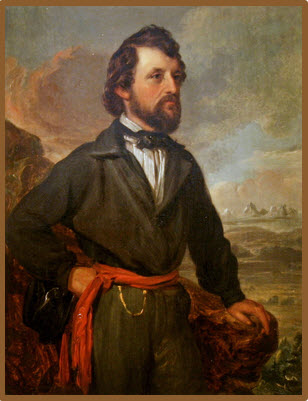
Portrait of John Fremont: William Smith Jewett, 1852
U.S.
travelers, such as shipping agents and fur traders, spread numerous stories
about the beauty of California. For
example, John Fremont, an army
officer who made several trips there, published descriptions of the region’s
mild climate and abundant resources. By
the 1840s, large numbers of American families began to arrive in
California. At first, most of them
settled in the Sacramento River Valley. Soon many Americans were discussing the
advantages of extending the border of the United States to the Pacific
Ocean. Manufacturing and shipping
companies wanted to establish ports on the Pacific coast to simplify trade with
China and Japan. This had the potential
to improve the nation’s economy. For
some political leaders, the issue of national security was at stake. They argued that it was easier to defend a
border along the sea as opposed to one shared with a hostile country. After winning the presidential election of
1844, James K. Polk, a firm believer
in Manifest Destiny, made two offers to buy California and New Mexico, but
Mexico refused to sell.
 Go to Questions 5 through 7.
Strained
Relations with Mexico
American
pioneers, who were at first welcomed by the Mexican government into the New
Mexico and California Territories, became s source of controversy by 1830. The strained relationship between the United
States and Mexico deteriorated further when Texas sent a delegation to
Washington D.C. and requested annexation in 1837. Mexico warned that it would view a positive
response as a declaration of war and denied any recognition of Texas
independence. The Mexican government
also failed in two attempts to reconquer Texas in 1842. When Congress agreed to annex Texas in 1845,
Mexico did not declare war. Instead, it
expelled the American ambassador, cut off diplomatic relations with the United
States and declared that the U.S. action was illegal. President Polk met with America’s military
commanders and ordered them to prepare for an armed conflict. He also dispatched U.S. ships into positions
near Mexican ports.
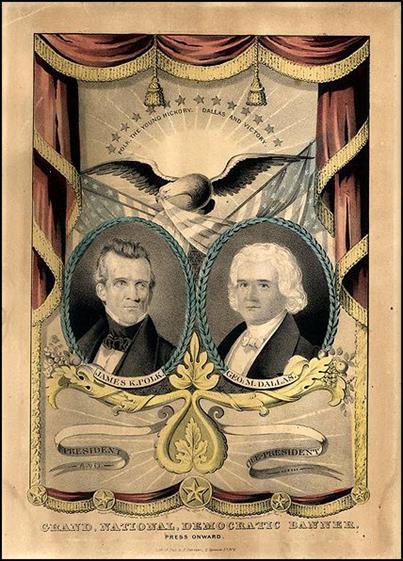
Campaign Poster Featuring James K. Polk
and Running Mate George Dallas: 1844
At
the same time, Mexico and the United States disagreed on the location of the
Texas-Mexico border. The United States
claimed that the Rio Grande River
was the official boundary. Mexico, on
the other hand, insisted that the Nueces
River was the actual border.
Although Mexico had agreed to reimburse American citizens for the losses
that they had suffered during that country’s war for independence, the Mexican
government stopped all payments until the dispute was resolved. In hopes of negotiating a deal, President
Polk sent John Slidell to Mexico
City and instructed him to offer $30 million for California and New
Mexico. In return, Mexico had to agree
to accept the Rio Grande River as the boundary of Texas. The United States also planned to take
responsibility for Mexico’s debts to U.S. citizens.
 Go to Questions 8 through 11.
President
Polk’s War Plan
The
Mexican government had no interest in discussing John Slidell’s offer and
announced its plans to reclaim Texas. In
response, President Polk ordered U.S. Army General
Zachary Taylor to lead his forces into the area between the Rio Grande and
Nueces Rivers. His troops established
their position and built a fort. The
Polk administration insisted that these acts were necessary to defend the U.S.
border. Mexican leaders, however, viewed
them as an invasion of their country. On
April 24, 1846, Mexican soldiers attacked a small group of Taylor’s men. When the news reached Washington D.C.,
President Polk called an emergency meeting of his Cabinet. All the members agreed that the attack was
grounds for a war with Mexico. On May
11, Congress, at the request of President Polk, passed a declaration of
war.
President
Polk wanted to achieve three goals in the war with Mexico. First, he wanted American troops to secure
the Texas border at the Rio Grande River.
The second part of the plan involved the seizure of New Mexico and
California for the United States. U.S.
forces would then advance to Mexico City and capture the enemy’s capital. With victories at Matamoros, Monterrey and
Buena Vista, General Zachary Taylor secured the border and accomplished the first
goal of the war by February of 1847. In
the meantime, General Stephen Watts
Kearney captured Santa Fe, a maneuver that gave the United States possession
of the New Mexico Territory.
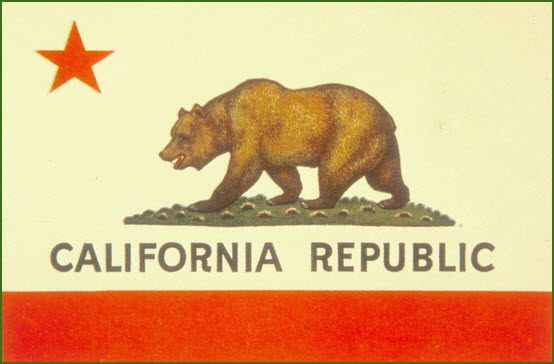
State Flag of California based on the Bear Flag
In
June of 1846, a few Americans took over the town of Sonoma and proclaimed
California an independent republic.
Because the flag of the new country pictured a star and a bear on a
white background, they named the new country the Bear Flag Republic. One month
later, a U.S. Navy squadron, commanded by Commodore John Sloat, captured the port of San Francisco. Sloat replaced the Bear Flag with the
American flag and announced that California had been annexed by the United
States. Many Californios, as Mexicans
living in California were called, joined the fight against American control,
but General Kearny and his forces arrived to end the rebellion. By January of 1847, California was firmly in
U.S. hands.
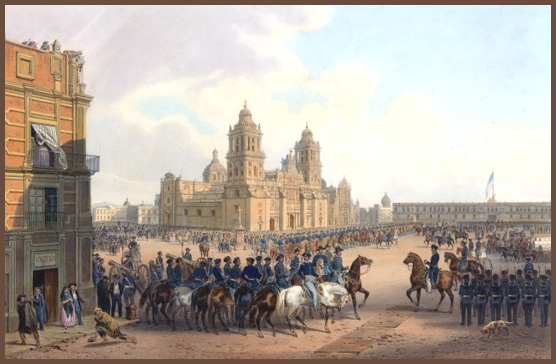
U.S. Army Occupation of Mexico: Carl Nebel, 1851
With
the accomplishment of the first two goals of the war, President Polk prepared
to launch the third part of his plan. He
appointed General Winfield Scott as
commander of the American forces and ordered an attack on Mexico City. In the spring
of 1847, Scott and his army came ashore near the Mexican port of Veracruz. After a three-week siege, General Scott
captured the coastal city and moved his forces 300 miles inland to Mexico
City. During the march, he encountered
the Mexican army and bands of armed citizens.
Scott’s army reached the capital in late August, and the city fell to
the Americans in mid-September. The
Mexican government was forced to surrender.
 Go to Questions 12 through 15.
Opposition
to the War
Following
the official declaration of war, support for the American cause spread. The army, which consisted of 8000 men before
the war, added 60,000 volunteers to its ranks within a few days. Polk’s party, the Democratic Party, backed
the war and their president’s war plan.
Most newspapers cheered on the conflict and wrote about the efforts of
the U.S. military in glowing terms. In
spite of the success of U.S. forces on the battlefront, however, an increasing
number of Americans disagreed with the war.
In Congress, Senator Henry Clay
and Representative Abraham Lincoln
criticized President Polk’s conduct of the military campaign and condemned the
war as unconstitutional. Those opposed
to slavery feared that new, slave states would be carved from the territory
gained from Mexico. When reports
describing the deaths of Mexican civilians surfaced, even more Americans
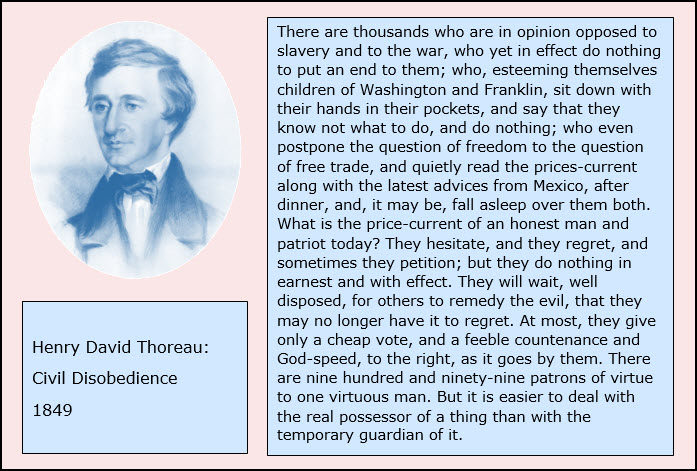
questioned the military actions in the Southwest. Henry
David Thoreau, a writer from New England, refused to pay his taxes because
he knew that a portion of them would be used to fund the war. After he was sentenced to jail for his
protest, Thoreau wrote Civil Disobedience, an essay which antiwar activists often
quote today. An excerpt from his work is
quoted below.
Go to Questions 16 through 18.
The
Treaty of Guadalupe Hidalgo
Following
the surrender of Mexico, President Polk sent Nicholas Trist to negotiate peace.
His efforts resulted in the completion of the Treaty of Guadalupe Hidalgo in February of 1848. In the agreement, Mexico recognized the Rio
Grande River as its border and gave up all claims to Texas. A section of the treaty known as the Mexican
Cession turned the California and New Mexico Territories over to the United
States in exchange for $15 million. The
United States offered American citizenship to the 80,000 Mexicans living in
these regions. Through the Gadsden Purchase in 1853, the American
mainland reached its present size, as indicated by the map pictured in the graphic. The Congress authorized a payment to Mexico
of an additional $10 million for a strip of land along the southern edge of New
Mexico and Arizona. Although the United
States experienced fewer casualties than their Mexican counterparts during the
Mexican-American War, 1,721 U.S. soldiers died in battle, and another 11,000
were lost to disease and war-related injuries.
Review the key events of the Mexican-American War and its outcomes by
watching the video listed below.
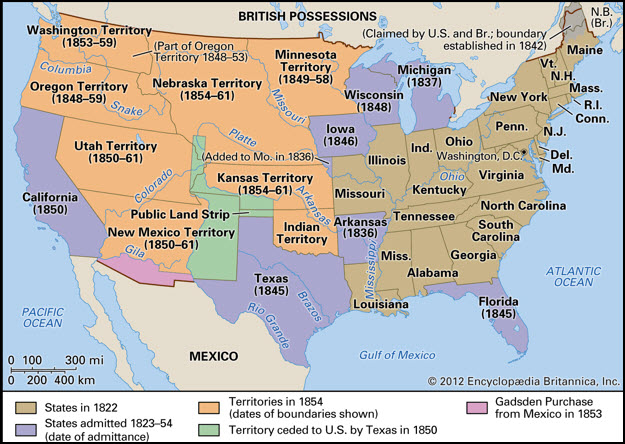
Map Showing the U.S. Mainland by 1853
 The Mexican Cession and the Mexican-American War
 Go to Questions 19 and 20.
Gold
in California!
In
January of 1848, James Marshall was
building a saw mill for John Sutter
a few miles outside of present-day Sacramento, California. Marshall noticed sparkling pieces of rock in
a ditch. When he showed them to Sutter,
the property owner confirmed that they were indeed gold. Sutter planned to keep the discovery a
secret, but the news leaked out. The
Great California Gold Rush began!
The California Gold Rush
Gold
seekers from all over the world hurried to California. Some journeyed by sea while others traveled
the Oregon and Santa Fe Trails. In 1849,
over 80,000 people, called forty-niners, made hurried to the West to mine for
gold. Americans made up three-fourths of
the influx, but large numbers also came from South America, Europe, Australia
and Mexico. Three hundred Chinese
immigrants also crossed the Pacific and established California’s
Chinese-American community. In four
years, the population of California grew from 20,000 to 220,000. Although the California Gold Rush more than
doubled the global supply of gold, very few forty-niners acquired long-term
wealth. Merchants, on the other hand,
earned profits furnishing supplies for the miners. For example, Levi Strauss, a Jewish immigrant, made his fortune by selling work
pants made from sturdy denim.
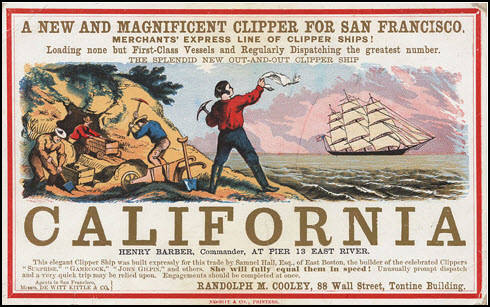
Sailing for the California: 1850
Because
of its sharp increase in population, California qualified for statehood in
1850. Californians wrote a constitution,
elected a state legislature and chose a governor. Its formal request for statehood, however,
set off a firestorm in Congress. The
southern senators and representatives objected to California’s admission to the
Union because the territory’s constitution outlawed slavery. With a ban on slavery, California would upset
the balance between slave states and free states. Some southern radicals, referred to as Fire-eaters, threatened to leave the
Union over the issue. It was up to
Congress to find a compromise that would permit California’s admission as a
state and would calm the anxieties of southerners.
California’s
gold fever began to fade by 1860, but strikes in other parts of the West, such
as Colorado, South Dakota, Arizona and Montana drew large numbers of
people. Many of these lands, however,
belonged to Native Americans through agreements negotiated with the U.S. government. Gold seekers thought nothing of violating
these treaties. Native Americans soon
found themselves confined to smaller and smaller areas. Learn
how they responded to these events by watching the video listed below.
The Gold Rush and Native Americans
Go to Questions 21 and 22.
What’s
next?
Between
1820 and 1860, Americans continued to develop a national spirit and pride in
their country. At the same time, strong,
sectional rivalries grew because the North and the South were determined to
further their own economic and political interests. Advancements in technology led to
improvements in transportation and communication that linked the North and the
Midwest. These developments linked the
Northeast and the Midwest economically. It
also made the differences between these regions and the South more apparent. Before examining the industrialized economy
of the North in the next unit, review the names and terms found in Unit 28;
then, answer Questions 23 through 32.
 Go to Questions 23 through 32.
 |
| Unit 28 Mexican-American War |
| Unit 28 Primary Sources: Life at a Mining Camp During the California Gold Rush Article and Quiz |
| Unit 28 What's the Big Idea? Worksheet |